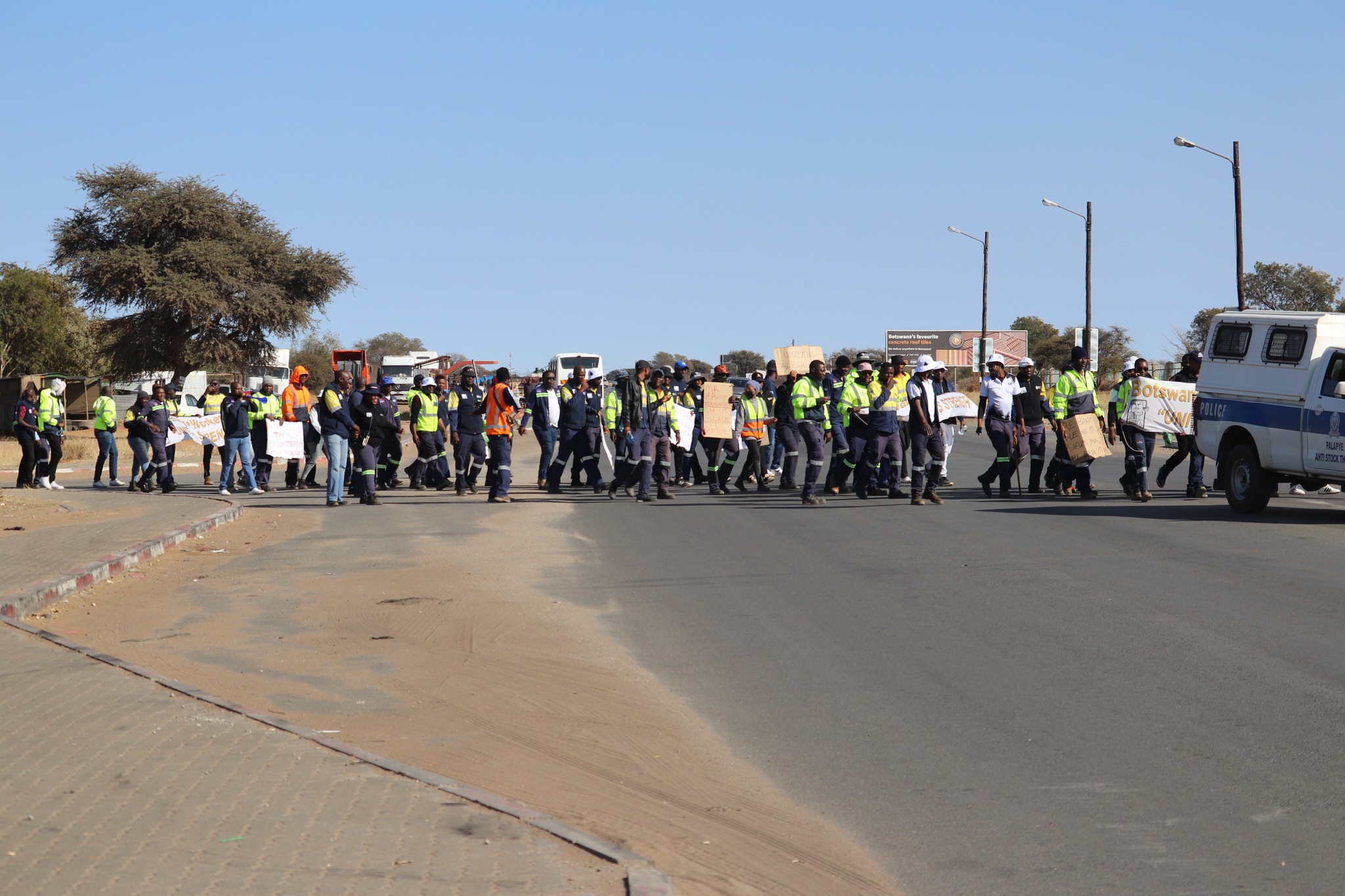
On May 28, 2025, at Lucara Stadium in Letlhakane, Comrade Emmanuel Mangope, the BMWU National SHE Chairperson and a distinguished representative of the Botswana Federation of Trade Unions (BFTU) on safety matters, delivered a stirring and impactful address advocating for a significant leap forward in occupational safety and health (OSH) standards across Botswana. His speech presented a comprehensive roadmap for transforming workplace safety.
Comrade Mangope highlighted critical shortcomings in the current legislative framework, asserting that Botswana continues to operate under fragmented and outdated workplace safety legislation. To rectify this, he urgently called for the enactment of a comprehensive OSH Act that aligns with international standards, clarifies responsibilities, mandates modern risk assessment practices (including technological solutions), and extends protection to workers in both formal and informal sectors. Such legislation, he argued, would establish a proactive culture of prevention.
A groundbreaking proposal from Cde. Mangope was the establishment of a dedicated Occupational Safety and Health Fund. This fund would be crucial for supporting health initiatives, financing vital training and retraining programs for both employers and workers, providing immediate relief for victims of workplace accidents, and fostering research and innovation in safety technologies. Such a fund, he emphasized, would shift the focus from merely reacting to accidents to actively preventing them.
He also urged Botswana to ratify two key International Labour Organization (ILO) Conventions: Convention 155 on Occupational Safety and Health, and Convention 187 on the Promotional Framework for Occupational Safety and Health. Ratifying these conventions would be a powerful demonstration of Botswana’s commitment to global best practices and an affirmation that safe and healthy work environments are fundamental human rights.
Furthermore, Cde. Mangope called for a comprehensive review and strengthening of the Workers’ Compensation Act. He noted that the current act does not adequately reflect the realities of modern workplaces, including digital and non-traditional arrangements. The review should expand coverage, ensure fair and timely compensation, and recognize new types of occupational diseases and injuries.
Recognizing the vital yet hazardous nature of the mining sector, he proposed the capacitation of the Department of Mines Inspectors. This includes increased resources, continuous training, and the adoption of advanced digital inspection tools like drone surveillance and environmental sensors to enable earlier risk detection and greater compliance.
Finally, Cde. Mangope strongly advocated for the active involvement of trade unions in workplace inspections and health and safety committees. He stressed that unions are not external parties but essential partners in safety, and global experience consistently shows that their inclusion leads to a significant reduction in workplace accidents.
Comrade Mangope’s visionary proposals chart a clear and actionable path toward creating safer, healthier, and more resilient workplaces for all workers across Botswana.